Planifolia carries the founding depth of Madagascar, rich in vanillin. Depending on the terroirs and the maturation, some lots can suggest cocoa, wood, natural roasted notes, hazelnut, rum or raisin.
ANTOKALY signature
Rare vanillas from Madagascar
A rare vanilla carries an aromatic signature found in one place only. A valley, a hillside, sometimes a single plot where a few families have been growing for generations. Its quantity follows the size of that terroir: several dozen tonnes when the area is wide and worked by many producers, a few kilos when one family alone tends it at the end of a track.
What never meets is two terroirs. A reference gathers the harvests of one same area, grown in the same conditions and prepared together: they speak with one voice. Our most confidential lots come from a single producer, so they are unique by nature. In both cases the border is the place, from the first sorting to the day the pods leave the trunk, and what the terroir set apart reaches the kitchen intact, with its name.
The rarity of vanilla is not new. At the end of the seventeenth century, coffee was weighed by the hundredweight while vanilla was counted by the stem.
We open to the world the terroirs of Madagascar that remain unknown.
THE PLACE
A living plot,
A living plot,
several expressions
Agroforestry as the foundation of our signatures
Vanilla never grows alone.
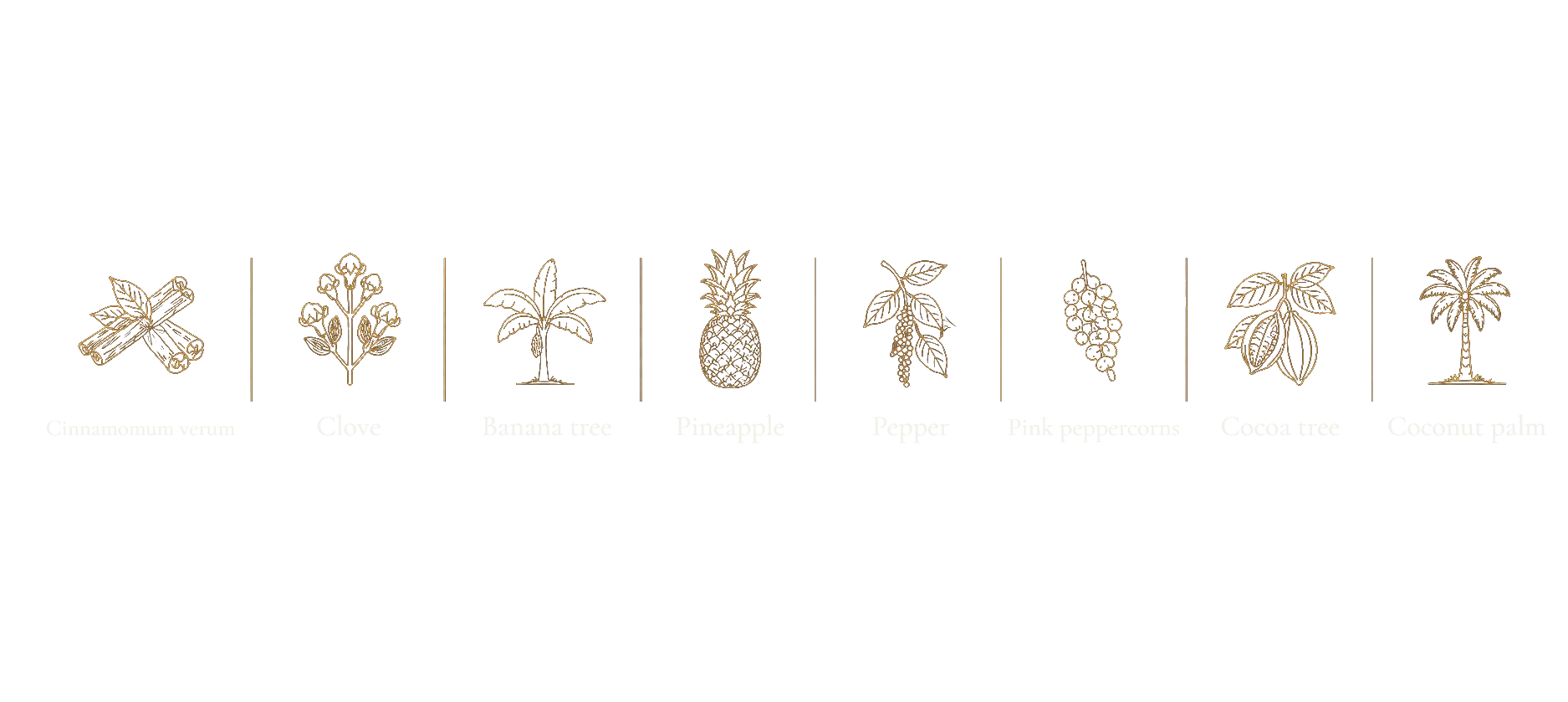
In our plots it takes its place at the heart of a living environment: true cinnamon, clove, banana, pineapple, pepper, pink peppercorn, sometimes cacao and coconut. Each species contributes to the balance of the place: shade, humidity, organic matter, the breathing of the soil.
Aromatic depth is also born from this cohabitation.
A vine grown in a rich environment, carried by a living soil and a dense canopy, expresses a matter shaped by that natural balance. Two neighbouring plots made up of different species already give two distinct vanillas.
The terroirs
An island that changes face from one valley to the next
Three varieties, more than 10 named lots, all born on one island read at the scale of the plot.
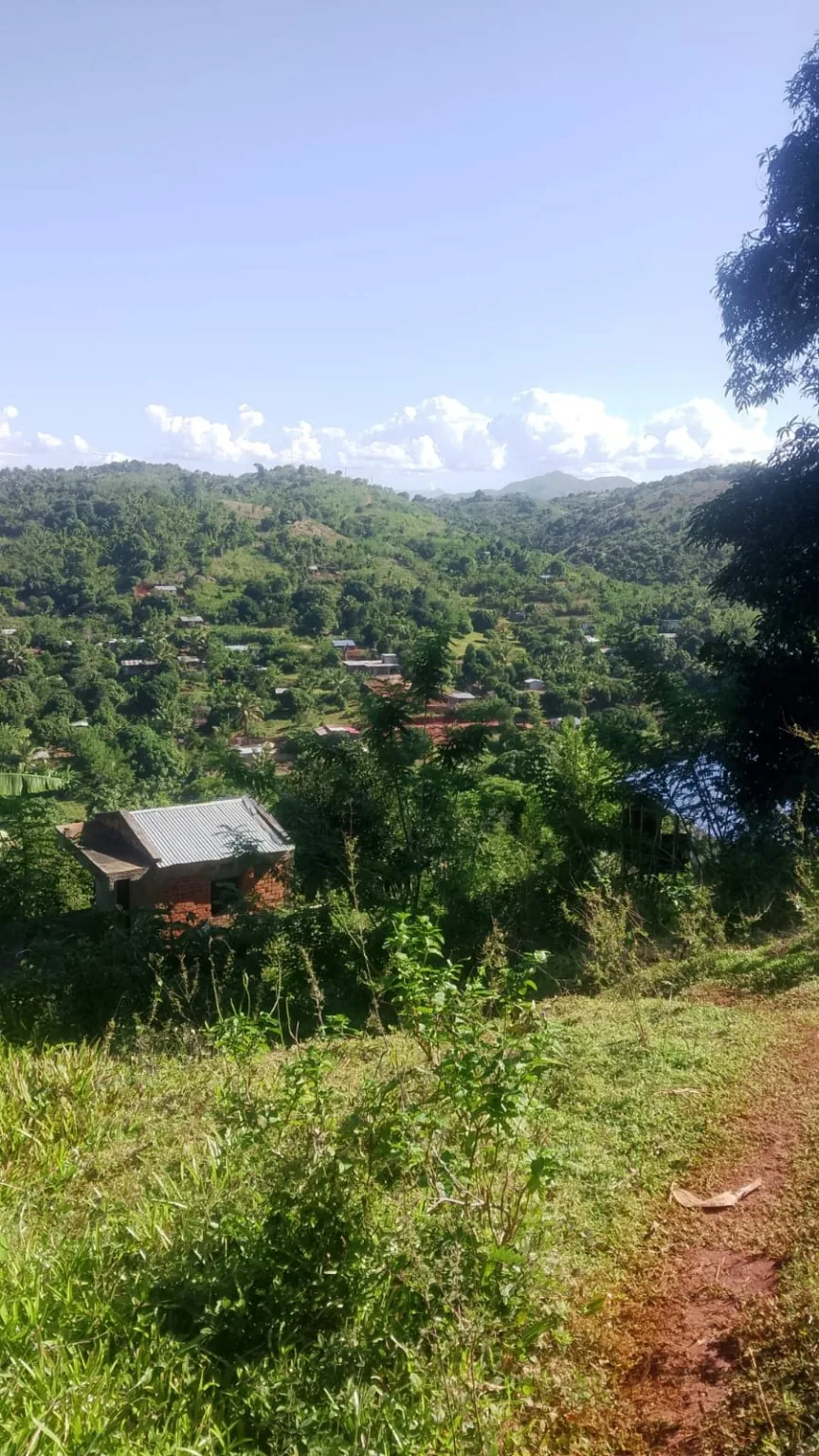
In north-eastern Madagascar, the ocean, the rivers, the forest and the mountains meet across a few hundred kilometres. A hot dry plain, a humid gulf, an inland valley sheltered by its massifs, a volcanic slope backing onto primary forest: these conditions follow one another sometimes within an hour of track. Each one sets its own rhythm for the vine, its own speed of ripening, its own way of loading the pod.
Menaka and Andrano come from the same cuttings. Menaka grows on wooded slopes open to the Indian Ocean. Rain is abundant there and the heat stays dry, and it is that dryness of the air that gives the pod its density: a Planifolia deeply intense and woody, buttery, cocoa-rich, floral. Andrano lies in the bay of Antongil, a hot and very humid gulf closed by an amphitheatre of mountains, the rainiest area of Madagascar. That constant moisture rounds the matter: same plant, same gestures, and a vanilla that is round, chocolatey, rum and raisin, down to a vinous depth. Two terroirs, two vanillas. The vine itself carries a history, that of the hybrid vanillas born at the Antalaha station.
We gave these places a name, because a terroir is remembered like a face. Voany, the hazelnut, owes its name to what the trunk installs over the long term, on volcanic soil backing onto the Marojejy massif. Marokintana, many stars, names the frost crystals that glitter on the surface of the pods after a very long maturation, in an inland valley sheltered by its massifs. Behind each name are a defined growing area, identified producers, a way of working that is passed on.
Tsara Gasy comes from a sacred mountain and arrives with a mahogany robe. It belongs to our most confidential lots, the ones we present as conversations unfold, according to the season and to the creation waiting for them.
A rare pod is then recognised by the clarity of its signature: cocoa, hazelnut, natural roasted notes, candied fruit, a floral thread, a deep woodiness, honey. We characterise every expression with our partner pastry chefs, on the real matter, in infusion as in creation, and then we give it its name.
Malagasy Tahitensis remains confidential on the island. It always carries a floral and anise thread, with expressions that can suggest prunes, cooked fruit, caramel, honey or sweet notes.
Malagasy Pompona opens a singular expression. Some Pompona can show floral and fruity notes, sometimes black olive, among other expressions revealed by the origin and the maturation.
The year
What a season makes possible
Every origin carries
its year.
A very sunny season concentrates the matter and pushes the pod towards deep registers. A spell of intense heat speeds up ripening on the vine. A cool year lengthens the cycle and lets the nuances settle. A rainy season swells the pod and shifts the whole balance of the lot. The same producer, on the same plot, finds new matter every year.
Once the harvest is set apart, maturation gives it the time to say what it carries. It refines the matter, stabilises the expression, sharpens the length on the palate. A Planifolia with roasted potential, a floral Tahitensis with cooked fruit notes, a fruity Pompona each call for their own rhythm and their own point of balance. A lot that holds its signature through the whole cycle takes its name and joins our references.
The art of maturationQuantity comes at the end of this path. The rule holds for all our lots: the place decides. A wide terroir opens an expression on professional working volumes, accompanied season after season under the same name. An isolated plot gives a few kilograms, and for that year only. In both cases quantity reflects the size of the terroir, the generosity of the season and the number of pods that reached the point of ripeness we look for.
Talk to us
Tell us what
Tell us what
you are creating
A ganache, an ice cream, an infused cream, a chocolate with character: the creation guides the reading of the lot. We start from what you are looking for on the palate, then we propose an origin and a year.
The pod then passes into your hands, because a signature is judged on aroma and infusion, in your base and at your dosage. We stay beside you to adjust the choice and follow the availability of the lot you keep.
Talk with us
Frequently asked questions