Vanilla is a vine. It clings, climbs, looks for shade and balance. In agroforestry, it lives in contact with other plant species, in an environment that shapes its growth and its future aromatic expression.
A cutting in a living place
Vanilla is planted from a cutting. A stem taken from a vine already in place, laid at the foot of a tree, which takes root and begins to climb. The gesture calls for a plot already established: trees standing, shade in place, ground covered. The vine enters an environment that existed before it.
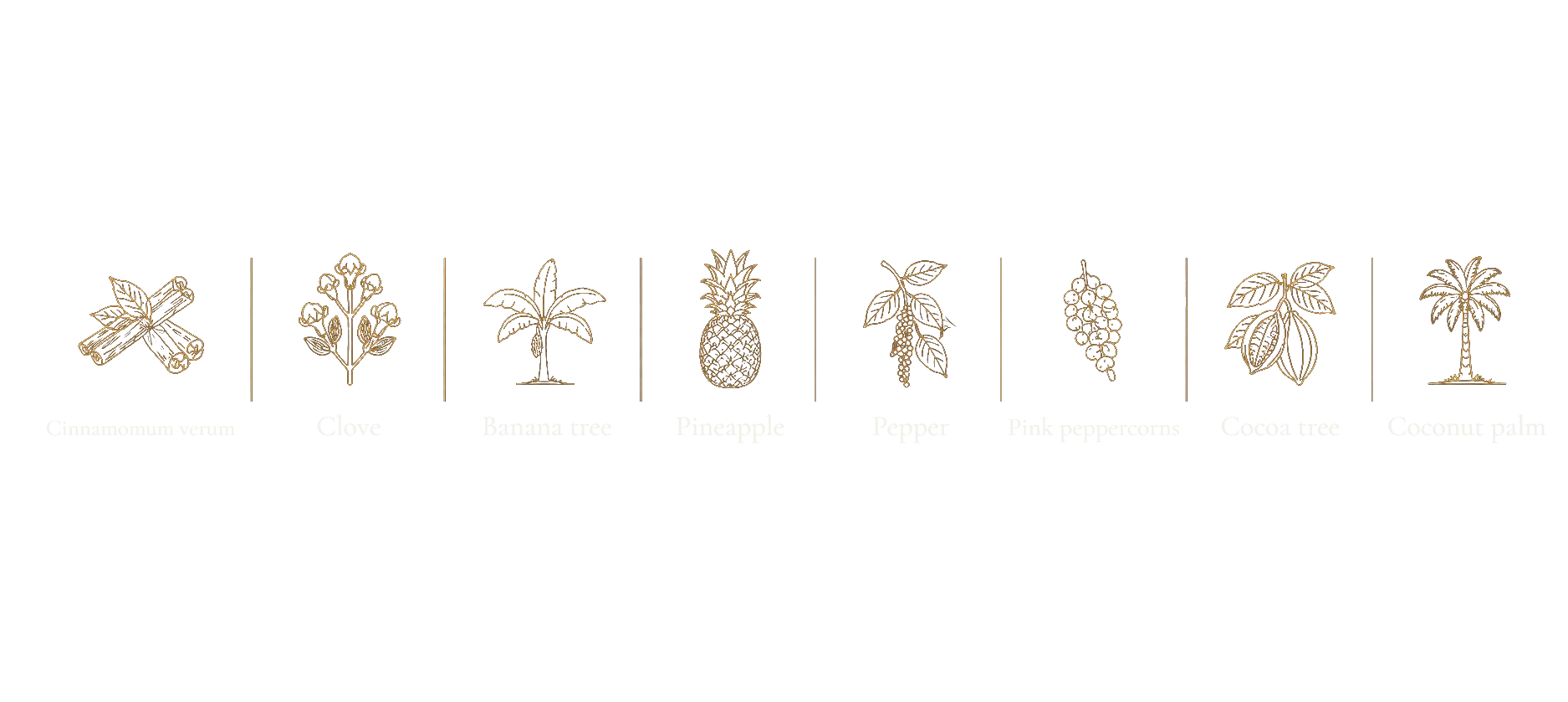
Our plots work in agroforestry. Vanilla sits there at the heart of a living environment: cinnamon verum, clove, banana tree, pineapple, pepper, pink peppercorns, sometimes cocoa and coconut. Each plot carries its own company, inherited from what the place already held.
This way of planting follows from the nature of the plant. Vanilla is an epiphytic orchid. In the forests it comes from, it lives clinging to a trunk, roots in open air, light filtered by the canopy. The agroforestry plot gives it back those conditions. It finds there the wood to hold on to, the humidity an understorey keeps, the softened light that crosses several thicknesses of leaves before reaching it.
The wood that carries
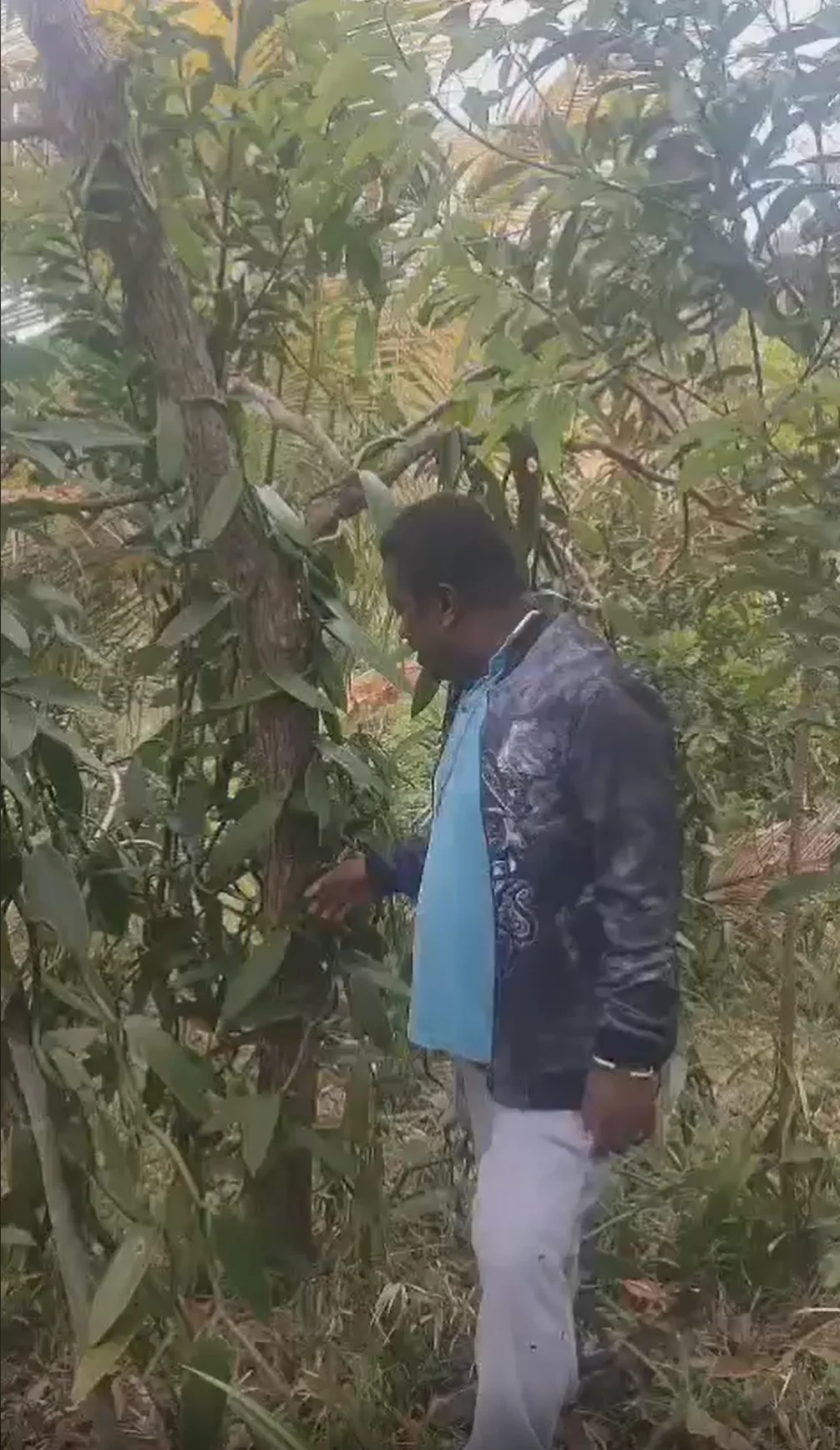
The support tree is the tree the vine clings to. It climbs in a spiral, presses its adventitious roots against the bark, holds there for its whole productive life. A support tree accompanies a vine for years.
For a long time, two species set the rule in the north-east: gliricidia and coffee. The first strikes from a cutting, a branch pushed into the ground becomes a tree in one season. The second already occupied the plots. We have understood since that the vine accepts many other woods. It climbs today on clove, coconut, mango, avocado, breadfruit, papaya, cocoa, pink peppercorn, coffee, gliricidia and physic nut. The filao borders the most exposed plots, where it holds the wind and carries a few vines as well.
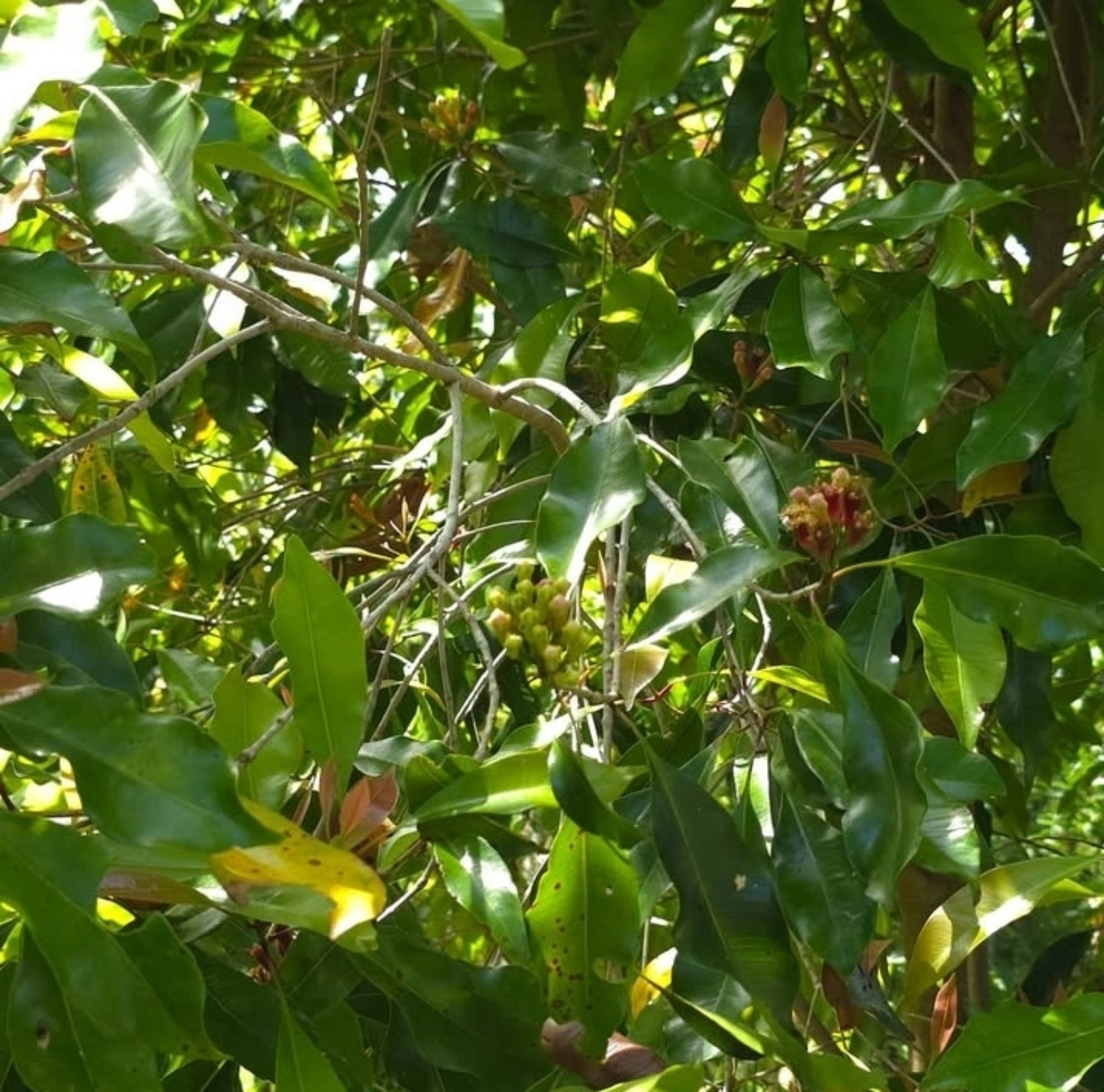
A survey carried out in the vanilla plots of north-eastern Madagascar recorded more than 120 support tree species. A quarter of them grow in Madagascar alone. The support of the vine already belongs to the flora of the island1.
This diversity opens the field of terroirs. Each wood gives a bark, a density of foliage, a litter of its own. Each plot composes its own mixture. SAVA vanilla grows this way on hundreds of different combinations.
A good share of these trees gives something other than support. Mango, avocado, breadfruit, papaya and coffee carry a harvest for the household while the vine grows. The plot supports those who tend it, as much as the pod it prepares.
The tiers of light
The canopy reads in height. The coconut holds the top and lets through a high light, which moves along the day. The banana tree occupies the middle tier, broad of leaf, dense of shade. Clove and cocoa form the low stratum, within reach of the hand. Pineapple covers the earth between the trees, in tight rosettes at ground level.
Light crosses this thickness before reaching the vanilla leaf. Depending on the species in place and their height, it arrives high and mobile or close and constant. Two plots receive the same day of sun and give it back to the vine in two ways.
The banana tree illustrates the distinction well. It shades, it gives a broad litter that returns quickly to the soil, it holds the humidity of the middle tier. The vine, for its part, climbs on the neighbouring woods. A species of the canopy sometimes holds a single role. That role is enough for its presence.
Pineapple works from below. A covered soil receives the rain cushioned, keeps its humidity longer, calls for less mowing. It acts on the water the plot retains, where the high tiers act on the light it lets in.
The microclimate, for its part, holds first to the place. A valley, a coast, the head of a bay each receive their rains, their winds and their temperatures. The canopy then adds its share, it tempers the heat above the vine, holds the humidity and calms the wind.
The hand sets the light
Vanilla calls for a share of shade to protect it from the burn of direct sun. It calls for a share of light so that the plant works. The balance is held by eye. It is set by pruning, twice a year, a branch cut here to open, another left there to cover. The grower looks at the canopy, measures what reaches the ground, decides.
Pruning gives the year two beats. Upkeep, for its part, continues all year long. The grass gaining at the foot of the support trees is cleared, a vine is set back on its route, clove, banana and fruit trees are tended as much as the vanilla. The plot holds as a whole. Each crop receives its share of care.
This setting varies from one plot to another and from one season to the next. A young plot calls for something other than an established plot. A coconut that has grown changes the terms of the following year. The savoir-faire holds in this repeated judgement, season after season. Two neighbouring growers arrive at two different balances.
Pruning also keeps the support trees at hand height, around 2.4 m in the plots of the region1. The vine stays within reach of the hand, for pollination flower by flower and for harvest pod by pod.
Arrived at the top of its support, the vine is guided towards another support tree, then towards another. It carries on its route across the plot. Its growth continues as long as it is given wood to go to.
The most vigorous stems supply the cuttings that renew the plantation. A vine in place gives the vines of tomorrow. The plot regenerates by itself. The matter turns in a closed circuit, from plant to cutting, from cutting to plant.
A soil fed by the plot
Litter falls from every tier. Banana leaves, coconut fronds, the fine foliage of the clove tree, each brings its matter and breaks down at its own rhythm. The grass from mowing and the branches from pruning join it at the foot of the support trees. The soil receives this way, all year long, what the plot produces above it.
These falls mingle and benefit all. The banana leaf feeds the clove tree, the coconut frond feeds the vine, the prunings of the fruit tree feed the pineapple. Each species gives back to the earth what it has drawn from it. The soil redistributes to the whole plot.
The soil fauna takes over. The earthworm fragments this litter, ingests it, returns it as casts enriched in nitrogen, phosphorus, potassium and calcium. Digging, it opens galleries that aerate the earth, let the rainwater in and carry it down deep2.
The serious grower reads this directly. A turned clod that brings up worms in number says three things at once: organic matter available, humidity well held, a soil that drains. The sign is immediate, it calls for a spade and a glance.
These worms belong to the island as much as the flora that feeds them. Madagascar carries a family of earthworms that lives here alone, the Kynotidae, whose single genus is Kynotus. New species are still described today, the latest in 20263. Malagasy endemism reaches down beneath the litter.
The soil of the SAVA stays fertile of itself. It receives the mown grass and the cut branches, the fauna does the rest. The plot maintains its own fertility.
All our plantations follow the principles of organic farming. About 40% are already certified organic, the others carry on their conversion on the same principles of cultivation. This conduct follows the same reasoning as the canopy: a living plot feeds the vine by what it produces.
A terroir reference
The canopy gives the light, the soil gives the matter, maturity does the rest. Maturation then reveals what the plot has prepared.
What the pod carries of the place
The aromatic signature begins in the plot. The soil that feeds the vine, the species that surround it, the light that reaches it enter the green pod well before the first preparation. Two neighbouring plots, carrying two different canopies, give two distinct expressions.
Harvest maturity leads next. A pod picked at its point carries everything the place has given it. The variety sets the base: Planifolia arrives rich in vanillin, intense, woody, cocoa-like, Tahitensis floral and aniseed. Preparation then maturation open the spectrum and make it legible.
One same cutting, carried to two places, gives two vanillas. The microclimate of the plot and the crops that surround it are enough to draw the aromas apart. This is what our reading of the varieties and terroirs of Madagascar retraces, valley by valley.
The season adds its share. The sunshine, the heat and the rains of a given year shift the balance of the lot, on the same plot and under the same canopy. Each origin carries its year this way. What a season makes possible details it harvest by harvest.
Some lots come back from one harvest to the next with their recognisable signature. We hold them. Others live as micro-lots and move with the years. An agricultural product grown organically keeps this share of movement. It is part of what it offers.
This plot-by-plot reading is the work of the house. It calls for tasting each harvest separately, recognising what returns from one year to the next, naming what repeats. Our 10 lots are born there. Each carries the name of the house because it carries an identified signature. This is how we open to the world the terroirs of Madagascar still unknown.
This reading continues through maturation: preserving what the plot has given, then making the signature clear for professionals.
For a chef, a pastry chef, a chocolatier or an ice cream maker, agroforestry becomes tangible at the moment of use: depth, floral notes, roundness, fruit, spice, length. The plot gives the start. The creation reveals the destination.
This forest cover is what the vine was already seeking in its Mexican cradle. It is one of the reasons for its settling in the north-east, retraced in how vanilla reached Madagascar. The wild vanillas of Madagascar occupy the dry forests as well as the humid forests of the island.
Sources
- Osewold J., Korol Y., Osen K., Soazafy M. R., Rabemanantsoa T., Martin D. A., Wurz A., Hölscher D. (2022). Support trees in vanilla agroforests of Madagascar: diversity, composition and origin, Agroforestry Systems, 96, p. 717-730. A survey of 1,080 support trees in 30 plots of north-eastern Madagascar. doi.org
- Natural Resources Conservation Service, United States Department of Agriculture. Soil Quality Indicators: Earthworms, Soil Quality Information Sheet. The role of earthworms in the recycling of organic matter, soil structure and drainage. nrcs.usda.gov
- Csuzdi C., Razafindrakoto M., Hong Y. (2026). A new and interesting earthworm species from Madagascar (Crassiclitellata, Kynotidae) with an updated key to the Kynotus Michelsen, 1891 species, ZooKeys, 1286, p. 251-263. doi.org
Professional reference
Connect the reference to the actual material: touch, scent, infusion and intended use together form a complete reading.
Frequently asked questions
What plants does vanilla grow among?
Vanilla is a vine: it climbs a living support tree and stays under the shade of the taller trees. In our plots, it shares the ground with cinnamon, clove, fruit trees and everything else the forest carries around it. Each plot is a garden, where the vine occupies one layer among others.
Does agroforestry influence the profile?
The soil feeds the vine, the shade tempers the heat, the humidity accompanies the maturation of the pods on the plant. These factors form part of the terroir, alongside altitude, exposure and season. The aromatic signature therefore begins in the plot, before preparation.