Following pollination, the load carried by the vine and the balance of the plot.
The vanilla
A living material
Vanilla evolves with its harvest point, its humidity, the way its preparation is led, the duration of its rest and the storage conditions.
Our work begins in the field and continues through to packaging: observing the pods, guiding each phase, stabilising the profiles and sharpening the signature of the lot.
For a Bourbon vanilla from Madagascar, the name gives only a reference. The value of the lot is built over time: hand pollination, maturity on the vine, preparation, rest, sorting, ageing and sensory reading.
About 40% of our plantations are certified organic. The other plots follow the same growing principles while the conversion programme continues. The lots are prepared in Madagascar, then shipped from Paris to culinary professionals.
Varieties & terroirs
Three varieties, several terroirs
Planifolia, Tahitensis, Pompona: each variety has its pace, its texture, its way of responding to heat, drying and time.
The terroir gives the first signs. The preparation sharpens them. The maturation brings them together. Our savoir-faire is to recognise these variations and guide each lot according to its own texture, maturity and aromatic potential.
The standard stays constant. The process adjusts to the variety, the terroir and the real state of the pods.
Discover the varieties & terroirs
Planifolia
Intense, woody, dense, always rich in vanillin. Cocoa, gourmand notes.
Tahitensis
Floral, aniseed, fruity. A broad, gentle, luminous profile.
Pompona
Spicy, complex, singular. A broad, expressive vanilla with strong aromatic presence.
Flowering
The flower, a patience of several years
In cultivation, vanilla is propagated by cutting. A section of vine, taken from a mother plant, replanted, staked. Three to four years of growth and care under the canopy separate this cutting from its first flowering. Each plant then carries clusters of flowers that open in succession over several weeks. The first harvest comes from the fifth year. In the forest, the wild ones follow the other path, that of the seed, when a pod ripens and opens. This repeated cutting gives the region a homogeneous population, which the Ambohitsara vanilla station opens up through crossing since 1944.
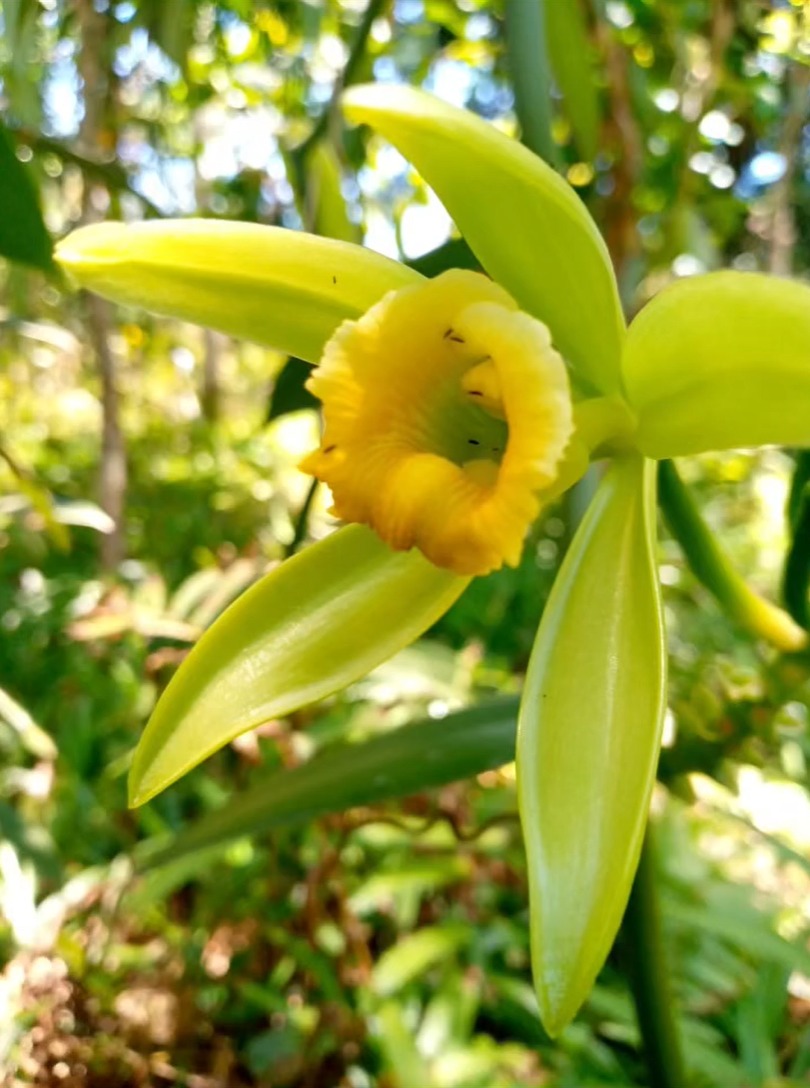
Each flower stays open for a few hours, between dawn and midday. The time of a morning to pollinate it. All the work of the previous years converges in this window.
Pollination
The marriage, a savoir-faire of the dawn
In Madagascar, cultivated vanillas are pollinated only by hand. The technique is called the marriage: lifting the rostellum, the small veil separating the pollen from the stigma, depositing the pollen, then closing the flower. A few seconds, a goldsmith's precision, a savoir-faire passed on in the plot. It holds for the three species we work with, Planifolia, Tahitensis and Pompona, across all our terroirs.
Experience guides the choice of flowers to fertilise. Each vine carries dozens of flowers. Selecting those to marry, dosing the load, balancing the plant: this judgement shapes the quality of the harvest well before preparation.
The wild vanillas of the island follow another path. They flower without human intervention, from the rocks of the north to the spiny thickets of the deep south. Indigenous bees visit them, which research names as their most probable pollinators. Nine species live this way in Madagascar.
Production
Tending the green pod on the vine
Before preparation, there is the pollinated flower, the pod growing on the vine, the maturity building slowly in the field.
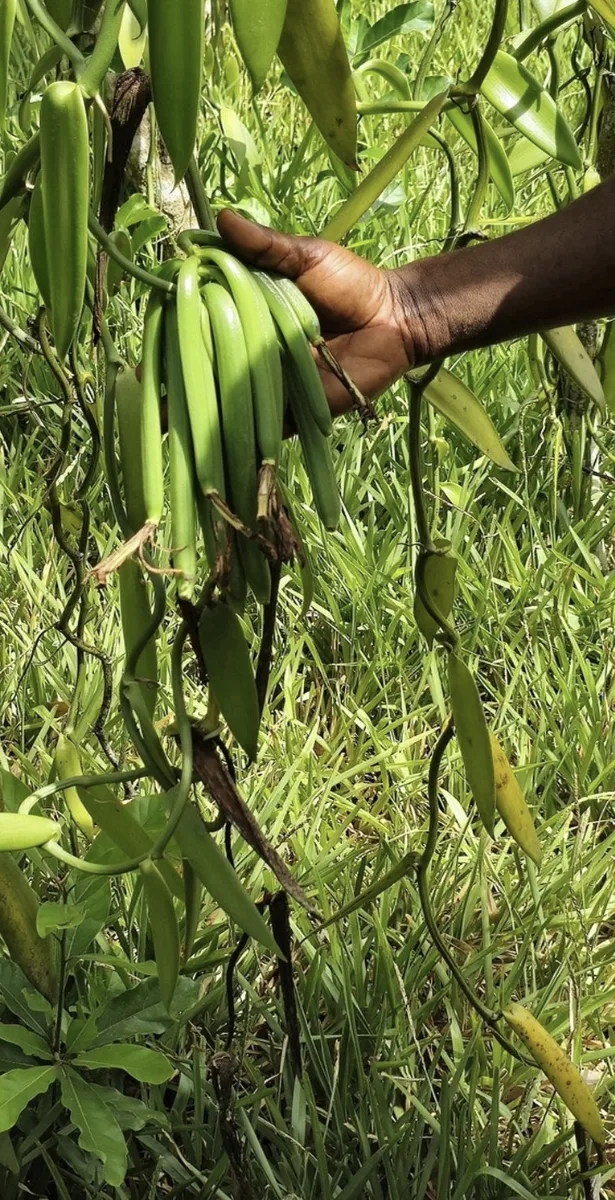
The green pod already carries the first markers of the lot: curve, length, density, skin condition, regularity, maturation pace. These signs guide the moment of harvest and the preparation process.
Observing the development of the green pod, its firmness, its curve and its uniformity.
Choosing the harvest point that allows a precise and stable preparation.
Preparation
When the pod becomes vanilla
Each step brings together a technique, a reference point and a check. Preparation becomes a tactile, dense progression, a piece of savoir-faire in its own right.
Engage
Scalding
The pods are briefly plunged into a hot bath. The thermal shock starts the enzymatic activity and opens the aromatic cycle.
- Technique
- Brief hot bath
- Reference
- Enzymatic activation
- Check
- Skin suppleness
Retain
Sweating
The pods rest in covered crates. The retained heat extends the enzymatic reaction and starts the browning.
- Technique
- Covered crates
- Reference
- Initial browning
- Check
- Residual temperature
Concentrate
Sun drying
The pods are exposed several hours a day. Humidity recedes, the structure firms up, the aromas concentrate.
- Technique
- Racks in the sun
- Reference
- Humidity in retreat
- Check
- Firmed structure
Stabilise
Shade drying
The slow phase sets the stability. The pods continue their drying on ventilated racks, at a mastered pace.
- Technique
- Rest on racks
- Reference
- Gradual descent
- Check
- Stability threshold
Balance
Rest
The pods are set to rest. Humidity evens out through the pod and the lot gains regularity before maturation.
- Technique
- Set to rest
- Reference
- More regular texture
- Check
- Stabilised suppleness
Post-preparation
Stabilising the pods before ageing
Coming out of preparation, vanilla continues its balancing. Colour, texture, density, sheen and suppleness give the essential indications.
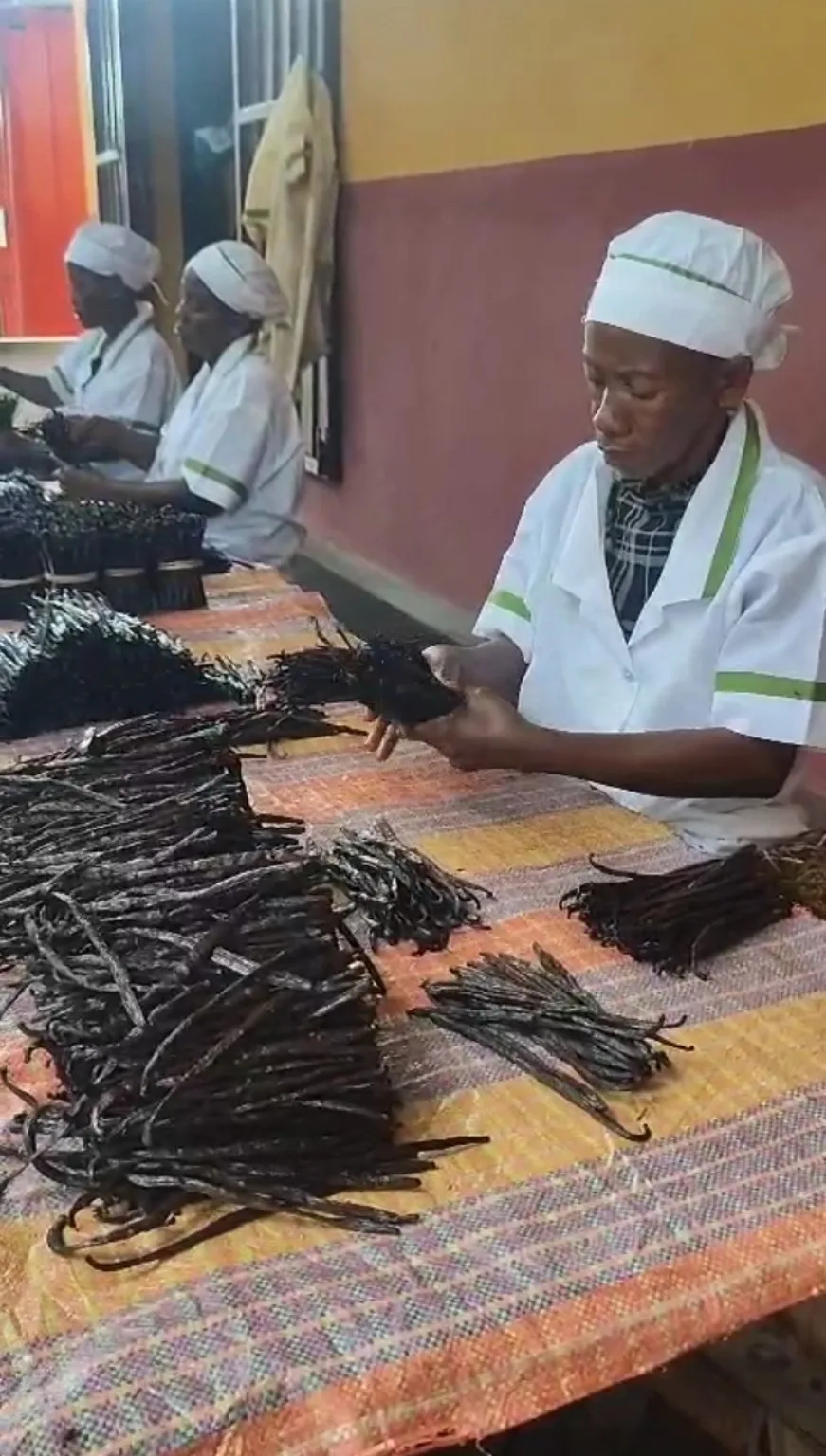
The lots are observed, turned and brought together according to their grade, humidity and pod integrity. This phase refines the inner coherence of the lot before its entry into maturation.
Homogenisation
Humidity spreads through the pod. Texture becomes more regular from one piece to another.
Tactile assessment
Skin, suppleness, firmness and sheen indicate the resting pace of the lot.
Lot formation
The pods are gathered by grade, suppleness, humidity and integrity, to form coherent and regular lots.
Ageing
The art of maturation
After preparation, vanilla continues to evolve. The essential oils blend through the pod. The aromatic notes round out, stabilise and gain depth. The signature of each lot becomes more precise.
The pods enter maturation in Malagasy rosewood chests, in shaded conditions. It is the longest phase of the cycle. Each lot is followed individually: its progression, pace and balance are observed over time.
Malagasy rosewood regulates humidity exchange, stabilises the inner temperature of the chests and contributes to the finesse of the profile. It belongs fully to the Malagasy savoir-faire, alongside time, the hand and sensory evaluation.
Maturation reveals the direction of each lot: woody depth, chocolate roundness, floral tension, aniseed length...
Discover the art of maturation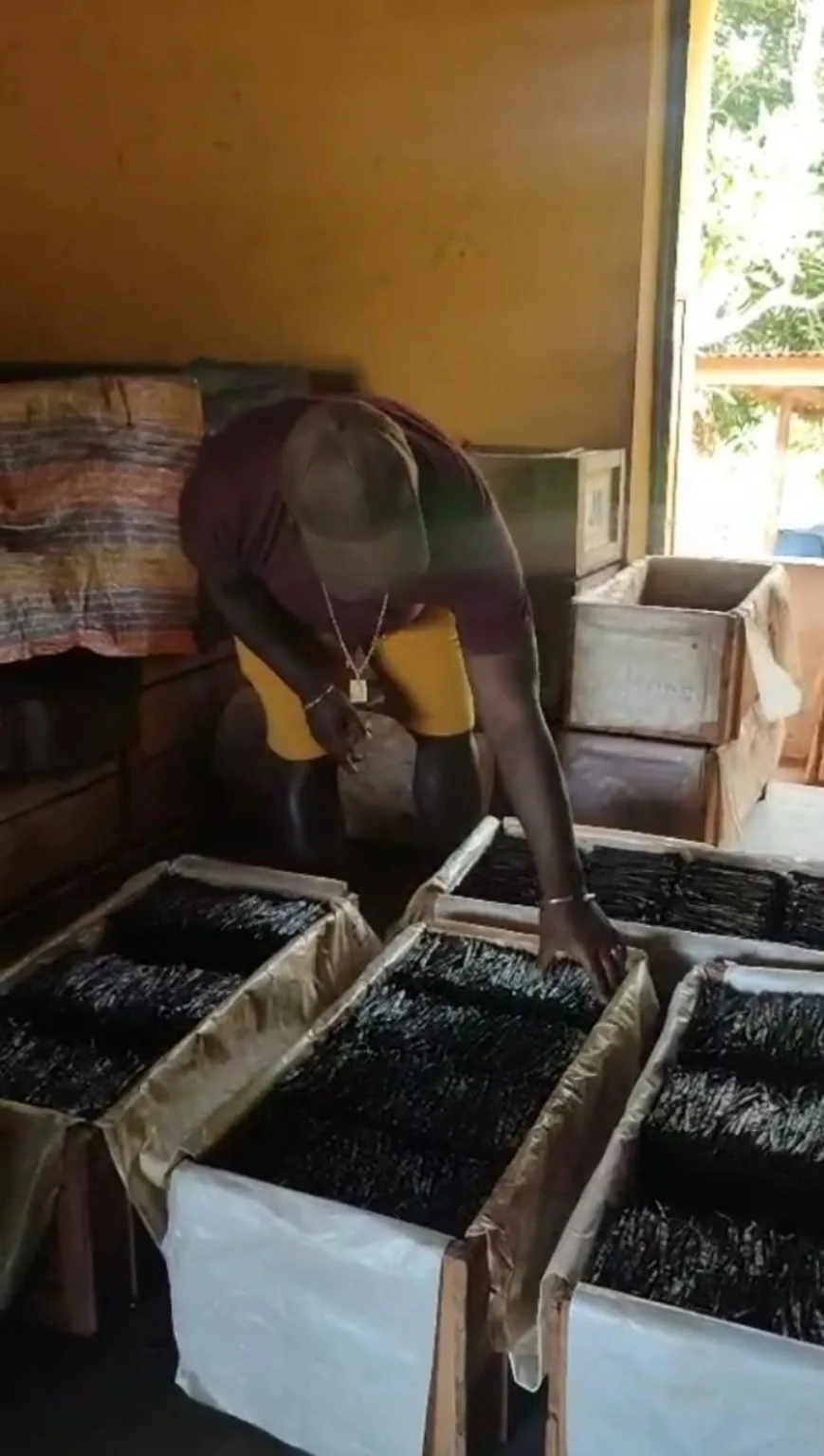
Selection
Selection lot by lot
Each pod is observed, sorted and qualified before joining a lot. The assessment focuses on the fragrance first, then on suppleness, stability, sheen, skin integrity and coherence within the lot.
From this pod-by-pod selection, the lots are formed and join the ANTOKALY palette.
Observation
Aspect, suppleness, colour, sheen, regularity. The first assessment goes through the eye and the hand.
Sorting
The pods are classified by size, grade, humidity, firmness and coherence within the lot.
Aromatic profile
The profiles are identified: main notes, secondary nuances, length, intensity.
Selection
Each lot joins the palette, ready for the creation that awaits it.
Recommending
Your creations set the direction
Depending on the client's needs, we orient the selection towards deeper, more floral, more spicy or rounder profiles. This recommendation comes from our knowledge of our different terroirs.
Planifolia can carry a chocolate base or a pastry with character. Tahitensis can bring a more floral, more luminous profile. Pompona can open a more singular route. Certain micro-lots, available in very limited volumes, offer a rarer path for creations that call for a precise imprint. We accompany you in shaping the signature of your sweet creations.
Start the conversation